
Norwegian Cruise Line Holdings has significantly expanded its future fleet pipeline, with the company’s orderbook now standing at 14 new cruise ships scheduled for delivery across its three brands over the coming years.
The expanded orderbook underscores the group’s long-term confidence in global cruise demand, even as ship deliveries stretch well into the next decade.
Fleet Growth Across Three Brands
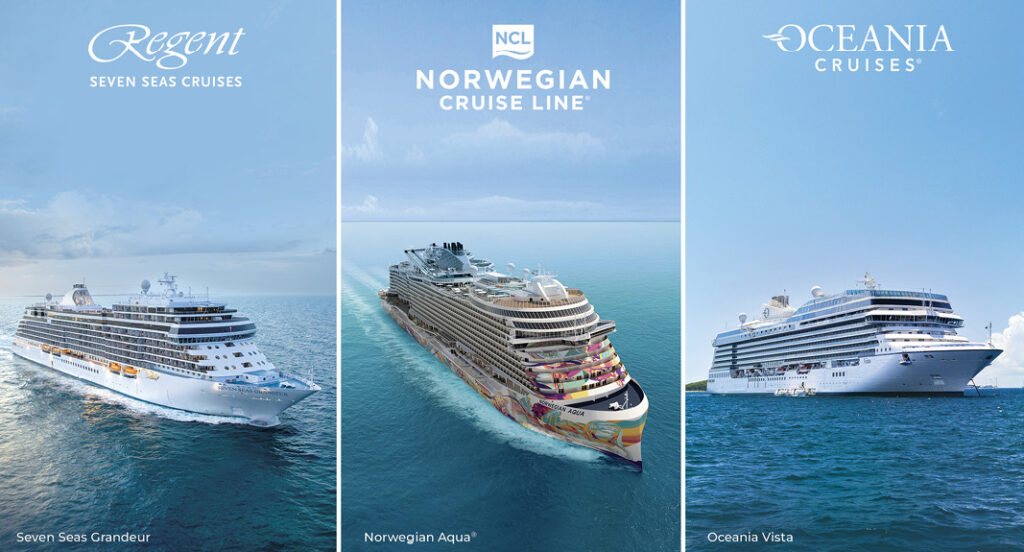
The 14 ships on order are spread across Norwegian Cruise Line, Oceania Cruises, and Regent Seven Seas Cruises, reflecting a balanced growth strategy across contemporary, premium, and ultra-luxury segments.
Norwegian Cruise Line accounts for the largest share of the orderbook, with multiple large-scale vessels planned to expand capacity and replace older tonnage. These ships are expected to feature next-generation onboard attractions, improved fuel efficiency, and enhanced sustainability systems.
Oceania Cruises’ newbuilds will focus on mid-sized ships designed for destination-rich itineraries, continuing the brand’s emphasis on culinary experiences and upscale comfort. Regent Seven Seas Cruises, meanwhile, has additional ultra-luxury ships on order that will push further into all-inclusive luxury cruising.
Deliveries Stretch Into the 2030s
According to the latest fleet data, deliveries from the current orderbook are scheduled from the mid-2020s through the early 2030s, providing Norwegian Cruise Line Holdings with long-term visibility on capacity growth.
The staggered delivery schedule also gives the company flexibility to align new ships with market conditions, demand recovery trends, and evolving regulatory requirements.
Focus on Efficiency and Sustainability
Many of the ships on order are expected to feature alternative fuel capabilities, advanced energy-efficiency systems, and lower-emission technologies. These investments align with the group’s broader environmental strategy, which includes reducing carbon intensity and modernizing its fleet.
Newer ships will also allow Norwegian Cruise Line Holdings to gradually phase out older vessels, improving overall operating efficiency while maintaining competitive onboard offerings.
Strategic Signal to the Industry
An orderbook of this size places Norwegian Cruise Line Holdings among the most aggressive fleet investors in the cruise sector. The move signals confidence not only in near-term recovery but in sustained long-term demand for cruising across multiple price segments.
As the cruise industry continues to rebound, the expanded pipeline positions the company to grow capacity, refresh its brands, and remain competitive against rival global operators with similarly ambitious shipbuilding programs.
The expansion also comes as Norwegian Cruise Line strengthens its leadership team, following the recent appointment of a new president to guide the brand through its next phase of growth.