
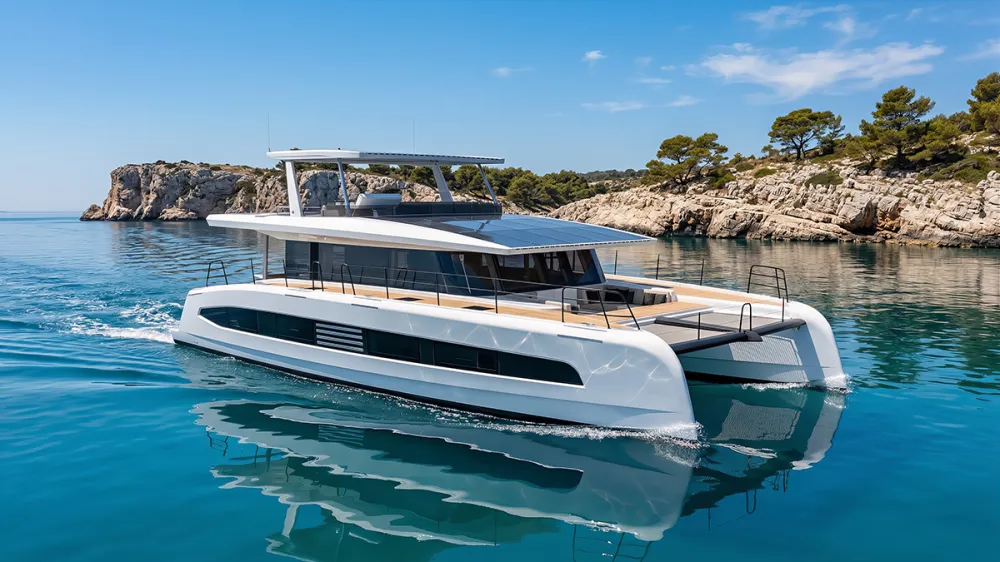
The solar array on the PY60’s deck catches the North Sea light like a mirrored shield.
A few brokers at the Stralsund shipyard called it “overengineered for calm waters.” Others pointed to the Italian teak panels curving into the hull smooth, almost sculptural.
Pioneer Yachts isn’t hiding the math: 1,540 sq ft of photovoltaics, twin 150-kW electric drives, a 300-kWh lithium battery stack. The numbers sit next to velvet fabric in the main saloon, where German engineering meets Neapolitan flair.
Some critics say the lines feel heavy, the stern too boxy for coastal dance. The engine room? A quiet hum, no diesel stink. Charging at a marina takes eight hours—longer than a morning coffee, shorter than a traditional refuel.
Aft deck guests might not notice the trade-offs. The fridge still cools. The generator wakes only in a storm. At 60 feet, it’s a quiet rebellion against traditional yachting.
The first unit leaves the slip this autumn.
A Fusion of Engineering and Aesthetics
The German engineering behind the solar-electric propulsion system
The PY60’s propulsion setup leans heavily on German precision—the kind that’s typically buried in powerplant schematics but here meets the open sea. Twin electric drives pull from 1,540 square feet of solar arrays spread across the hardtop and coachroof, a layout that seems to balance efficiency with practicality. One broker noted how the system avoids the “battery bulk” common in green boats, keeping the catamaran’s weight distribution sharp for handling. You can see the tech’s fingerprints in the smoothness: no lagging thrusters, no diesel growl, just a quiet hum that some say feels more like a luxury sedan than a 60-footer.
Twin diesel generators are still there—because let’s face it, solar alone won’t power a transatlantic trip—but they’re tucked neatly amidships. That means the engine room isn’t a noisy cave, which opens up the lower deck for a spacious area.
How Italian design influences the yacht’s interior and exterior appeal
Micheletti + Partners’ touch is all soft edges and warm materials—think woolcrete paneling with a wool-like texture and oak joinery that avoids the sterile feel of many modern builds. The flybridge’s sunroof isn’t just a design flourish; it practically begs for lounging, even as some traditionalists mutter about overheating in summer. Out back, the sliding glass door between salon and main deck? A masterstroke. It turns a 60-foot boat into something that feels like a house on water, which, honestly, is the Italian way.
The synergy between sustainability and luxury
What’s striking isn’t just the tech or the styling, but how little friction exists between them. The solar arrays aren’t slapped on as an afterthought—they’re woven into the hull lines, almost sculptural. Some buyers gripe about the cost premium, but others point to the quiet pride of sailing with zero emissions in the Mediterranean’s cleaner harbors. A few comments online noted how the PY60’s blend feels less like a compromise and more like a shift—proof that sustainability doesn’t have to mean sacrifice, at least when you’ve got German engineers and Italian designers in the same room.
Inside the PY60: Features and Specifications
Layout and living spaces across five staterooms
Spreading five cabins across its beam, the PY60 prioritizes square footage over traditional layouts. Main saloon ceilings rise just under two meters—snug for a catamaran. Online forums buzz about the “crowded” feel compared to bigger builds. VIP suites share the lower level. The third cabin is tighter than monohull equivalents but breathes better. A few forum posters fixated on the galley’s placement near the helm, debating if it’s “genius or a recipe for chaos.”
Solar panel coverage and energy efficiency
The hardtop and stern wear a bold 1,540 sq ft PV array. Black matte panels can’t hide their presence. Some find the contrast too stark against the white gelcoat, while Pioneer Yachts says the tilt angle and unobstructed positioning maximize exposure. A Genoa broker mentioned owners will likely keep backup generators—just not for moving the boat.
Interior design by Micheletti + Partners
Soft oak panels line the bulkheads, offsetting vertical LED strips. Linen upholstery surprises visitors expecting slick synthetics. The galley’s matte black fixtures echo the panel pattern, though the sharp divide in materials breaks the open-plan flow. No official claims about hidden storage, but photos hint at them. Modern builds often trade storage for aesthetics.
Naval architecture by Cossutti & Ganz
Hulls taper sharply for a 60-footer. One sailor called it “almost suspicious” given the battery weight onboard. Twin electric drives are the simplest option for catamarans, but the lack of furling systems for sails? That’s a talking point. The 16.7-foot beam gives every space an oddly generous footprint.
The Future of Yachting: What This Yacht Represents
How the PY60 aligns with the growing demand for eco-conscious yachts
The PY60 turns heads and raises questions. Fuel prices and carbon footprints are hot topics at marinas, and the 1,540 sq ft of solar arrays on this 60-foot catamaran stand out. Seasoned sailors don’t just nod—they lean in. Some still debate whether solar can handle weeks at sea, but the lithium battery packs and 22kW electric drives feel like more than a gimmick. The boat’s got enough heft and storage to make skeptics pause.
The role of new shipyards like Pioneer Yachts in the electric boating revolution
Pioneer Yachts in Stralsund is a new entrant, not the first to try electric yachts. The build leans on Cossutti & Ganz’s naval architecture name, but the real shift is in how a fresh player is pushing older builders to react. Brokers I’ve spoken to describe it as a shift, though some mention the learning curve. Quiet motors and exhaust-free air stick in people’s memories.
What this means for the future of long-distance sailing
Long-range sailing hasn’t changed much since diesel became standard. The PY60’s goal—solar-powered weeks at sea—isn’t just ambitious. Some owners love the idea of ditching fuel logistics entirely. Others worry about cloudy trade routes. This boat isn’t selling on promises. It’s selling on proof the tech works now. Whether it’s a revolution or a slow shift, the PY60 shows the future is being built from the ground up.
This New 60-Foot Solar-Powered Catamaran Combines German Tech With Italian Style sits at the dock with its solar panels catching the morning sun.
What People Keep Asking
A few owners mentioned how the solar array size – 1,540 square feet stretched across the bridge deck – seems excessive for a 60-footer. After seeing Pioneer One, though, most agree it powers 80-hour trips without needing a grid charge. Winter performance up north remains a question mark unless the generator gets an upgrade.
The German-Italian split is clear: Lürssen built the hull with straightforward engineering, while the interiors channel a Milan apartment’s vibe. Brokers in the Mediterranean say the design appeals to buyers who want eco-claims but still crave marble countertops. Range numbers circulate constantly – 120 miles is the figure everyone quotes, but weather will likely decide how far that actually goes.
Marina crews appreciate the zero-emissions label but keep wondering why the boat isn’t bigger. Online chatter circles around charging logistics: three full days in port to recharge feels like a stretch. The twin electric drives are quiet, no doubt about that. Forums warn the learning curve is steep if you’re used to diesel’s instant punch.
Cossutti’s lines split opinions at the yacht show. Some called it “boringly practical,” others saw a new angle – “Like a Formula 1 car but with better storage.” The five-stateroom layout has fewer complaints, keeping common areas from getting swallowed up. Still, I wonder how it balances battery weight unless extra cells are tucked belowdecks.
The Stralsund shipyard’s reputation for precision builds means most believe this goes beyond marketing hype. Nobody’s speculating on resale yet. A few online comments say the price is “within reach” for a sustainability-minded buyer, but that’s only part of the conversation.
Still Early Days
The 1,540 sq ft solar array claims 100% emissions-free cruising under ideal conditions. Five staterooms feel cramped for longer trips. The hull shape probably handles rougher waters better than it looks. Still see how the battery specs hold up in real weather.
Might look different once sea trial logs come out. The deck layout’s got a few awkward angles—hard to tell if they’ll matter.
Twin 110kW electric pods? Solid choice for short-haul, but docking in high winds feels risky with no diesel backup. Italian lines meet German logic, sure, but the price tag’s a maybe.
Solar yachting’s still niche. Weather-dependent. The Monaco Yacht Show next month will show how many people actually want to be at the mercy of the sun.