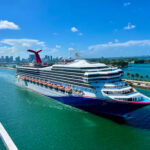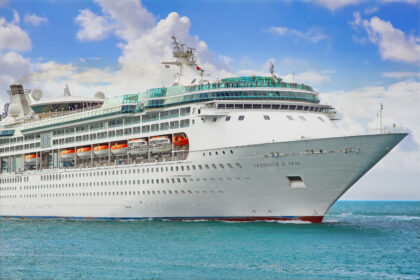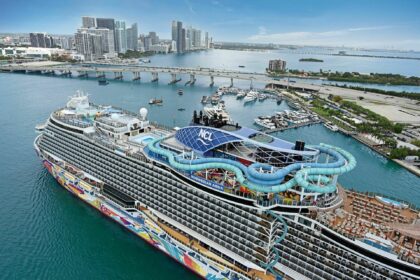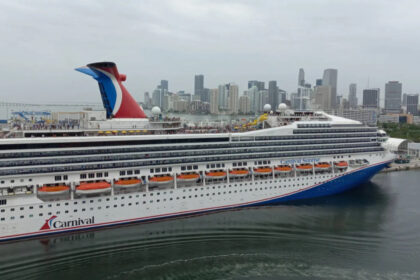

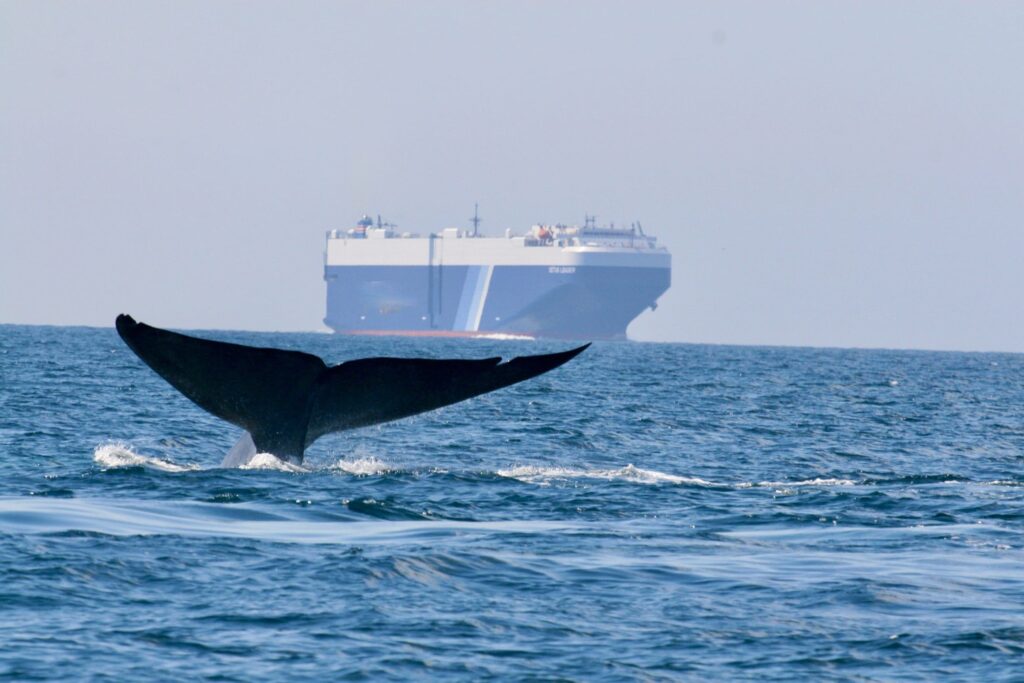
Cruise ships sailing along the California coast are being invited to play a bigger role in protecting endangered whales and improving air quality.
The Protecting Blue Whales and Blue Skies (BWBS) program has officially opened participation to cruise lines starting in the 2026 season.
For more than a decade, the initiative has focused on encouraging large commercial ships to slow down in key whale habitats. Now, organizers believe cruise operators can make a meaningful difference too.
BWBS is a joint effort involving regional air districts, marine conservation groups, and scientific organizations. Together, they work to reduce ship strikes on whales while cutting harmful emissions along the coast.
Why Slower Speeds Matter for Whales and Air Quality
Large vessels traveling at high speeds pose a serious risk to whales, especially blue, fin, and humpback whales that migrate through California waters.
Studies show that when ships reduce speed to 10 knots or less, the risk of fatal whale strikes drops by about 50 percent.
Slower speeds also lead to cleaner air. Reduced fuel burn means fewer nitrogen oxides, particulate matter, and greenhouse gases released into coastal communities.
Since launching in 2014, BWBS has partnered with more than 50 global cargo shipping lines. Together, participating vessels have logged over 1.5 million nautical miles at whale-safer speeds.
The environmental impact has been significant. The program reports thousands of tons of air pollutants avoided and measurable reductions in underwater noise, which also benefits marine life.
Cruise Ships Seen as a Key Opportunity
Cruise ships account for a relatively small share of vessel traffic in California’s speed-reduction zones. However, they contribute a higher proportion of emissions compared to distance traveled.
Data from recent seasons shows cruise ships made up about three percent of nautical miles in protected zones, yet produced roughly six percent of emissions. This gap highlights why slowing cruise vessels could deliver outsized benefits.
Research also shows cruise ships typically travel faster than other large vessels when not restricted. Average speeds range from 14 to 15 knots, with some ships reaching 20 knots.
By reducing speed during sensitive periods, cruise lines can significantly lower emissions and help protect whales. Program leaders say many cruise operators have already shown interest and are eager to participate.
Opening BWBS to cruise lines marks an important expansion of the program. Organizers describe it as a chance for the cruise industry to actively support California’s environmental goals.
Participation is voluntary, but benefits are verified through independent tracking and data analysis. Ships that comply contribute directly to cleaner air, safer waters, and healthier marine ecosystems.
As cruise travel continues to rebound, BWBS leaders say cooperation at sea matters more than ever. Slowing down, they argue, is one of the simplest ways ships can make a lasting environmental impact.
The move also reflects how major U.S. cruise ports are investing heavily in long-term growth, similar to how Los Angeles has just unveiled plans for a brand-new cruise terminal designed to handle larger ships and rising passenger demand.